




Introduction
Give AI to an organization without a clear definition of what 'good' looks like, and it will produce more content faster. Not better outcomes. That distinction between scaling output and scaling value sits at the heart of where pharma marketing stands today.
In this Q&A article, Frank M. Chen, Bausch + Lomb's Marketing Hub Lead, shares his perspective on how AI and omnichannel strategies are reshaping healthcare professional (HCP) engagement in pharma marketing.
Frank M. Chen has spent most of his career in pharmaceutical commercial roles, with a focus on digital strategy and execution. His expertise spans digital marketing, solutions, and omnichannel engagement. He joined Bausch + Lomb two years ago and, a few months ago, transitioned from the brand omnichannel engagement team to his current role leading the content supply chain. His team was created to operationalize AI-driven content creation at scale, reflecting the organization's recognition that executing a strong omnichannel strategy requires a fundamentally different approach to content production.
Frank Chen (FC): We are building an internal marketing content factory. While many companies have done this to varying degrees, we are at a unique vantage point. In addition to addressing our omnichannel marketing challenges, we are leveraging today’s significantly more mature AI tools, unconstrained by legacy content production models.
A useful analogy is China’s telecom evolution. When China liberalized its telecom market, it did not have an established infrastructure to work around, and that turned out to be an advantage. Without legacy systems already in place, the country leapfrogged directly into wireless infrastructure. We are in a similar position. By not being locked into how content has always been produced, we can build something natively designed for an AI-enabled future, built for speed, scale, flexibility, and adaptability from day one.
At Bausch + Lomb, our team operates as a commercial growth engine, with a focus on operationalizing value at scale. That is a fundamental shift in how we think about content production and its connection to the broader commercial organization.
The true challenge is not in the technology, but in efficiently improving the existing marketing operation. That requires answering two questions. Where does AI genuinely add value, and where does human judgment remain essential? We all hope that AI can provide end-to-end automation: a request prompt goes in, perfect content comes out. But without the right guidance, it is likely to backfire. Too much noise or too little information on the way in just means gibberish on the way out. The real value lies in deploying AI selectively to enable scale, optimize execution, and drive data-informed automation improvements at the points where it matters. Knowing where to loop in human judgment is where the work gets challenging.
FC: What I have seen work well is applying AI to well-defined, repeatable workflows. When AI is embedded in a system with clear inputs, defined guardrails, and appropriate human oversight, it genuinely improves speed, consistency, and quality, especially in a highly regulated environment like pharma.
What remains aspirational is fully autonomous problem-solving for new challenges. We are not yet at a point where AI can independently interpret nuance or navigate novel, real-world situations without human oversight, and that reflects where AI development genuinely stands today.
The reality is that AI performs best when applied to problems it has encountered before: similar, well-framed problems with clearly labeled results. The way I think about it, AI is fundamentally a pattern recognition system. Generative AI is a system for pattern generation. Both are highly effective when the pattern is established. Problems that share similar patterns can be solved with similar approaches, and AI excels at exactly that, at a scale and speed that was simply not possible before.
The biggest unlock is not a bigger or better model. It is internal readiness. I believe success belongs to organizations that define what “good” looks like, commit to fine-tuning, and build the optimal frameworks to scale value, not just output.
“… success belongs to organizations that define what “good” looks like, commit to fine-tuning, and build the optimal frameworks to scale value...” - Frank M. Chen, Marketing Hub Lead, Bausch + Lomb
Our path to unlocking value relies on pairing transparent communication with early, tangible wins with our brand teams. We show the teams what successful AI integration could look like. By deeply engaging with brand teams to navigate the day-to-day challenges, we establish ourselves as a vital strategic partner rather than a back-end technology or supporting function. When people see we are all trying to solve a common external challenge, and not just trying to sell them innovation, the adoption path becomes much shorter.
We have also learned that we need to have the discipline to qualitatively interrogate AI outputs. This means evaluating whether they are good, bad, or completely unexpected, and discerning the underlying factors guiding that output. Success demands a long-term commitment of time and effort to fine-tune the system, investigate what the technology is producing, and uncover the logic—or its absence—driving those outputs.
Ultimately, this deep operational discipline is an effective way to build a framework that scales value rather than output. While organizations use AI for content creation, the current process for some seems to remain inconsistent. For our team, true success means being able to deliver high-quality results reliably; that is what we mean by scaling for value.
FC: Pharma has made significant investments in building capability for channel activation and communications. What we are still developing, as an industry, is the institutional learning and orchestration that turns those individual channel efforts into something coherent and compounding.
One under-appreciated challenge is that HCP needs are not static. While pharma continues to strive for seamless experiences, what HCPs consider to be valuable and relevant insights continues to evolve as market dynamics shift and as the patient populations they serve change. This creates a moving target: even well-executed omnichannel programs can quickly feel misaligned if the underlying content and messaging do not adapt in real time.
Part of the problem is how we measure success. We drive toward impressions and click-throughs because those are the common key performance indicators (KPIs). The quality of the experience across channels is harder to quantify, so it often doesn’t make it onto the scorecard. And as the saying goes, what gets measured gets managed.
The other gap is in how content gets produced. The traditional model of working in a linear workflow often falls short when scaling to meet modern omnichannel demands. Content is often created for a specific channel or use, and achieving efficiency at scale becomes a constant hurdle.
Closing the gap requires a shift in the operating model. It means building a modular content system, one that delivers consistent yet personalized communication, varied by audience, channel, context, and timing. And critically, it means building feedback loops into that system. Content performance in one channel or interaction should influence the next. Each loop generates learning, and that learning gets built back into the model. Over time, the output gets better with every cycle, and that compounding effect is where the largest value of modern omnichannel execution lies.
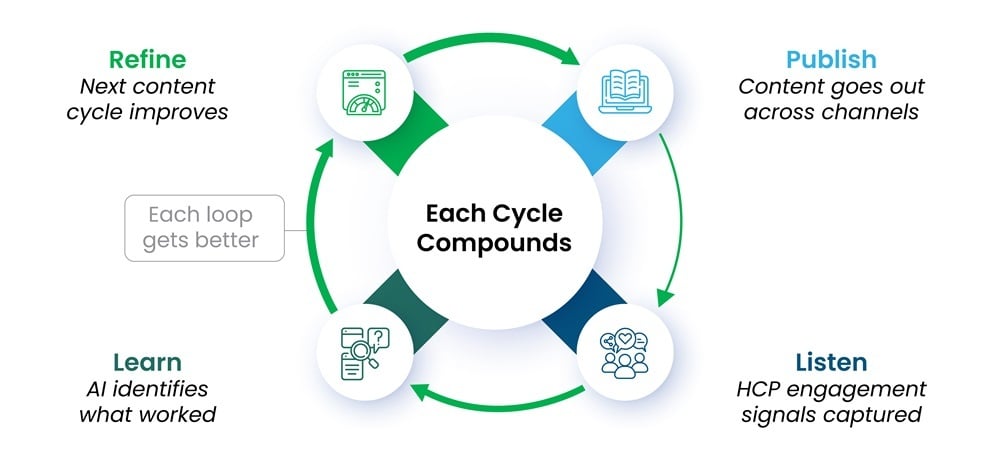
Figure 1: Each Cycle of Publish, Listen, Learn, and Refine Compounds into Better Engagement
FC: The way I think about the MLR review/Promotional Review Committee (PRC) may differ from many in the industry. I do not see them as constraints to content creation. I see them as critical partners in engaging the market responsibly and in helping the organization reduce the risk of regulatory non-compliance so we can communicate optimally.
At Bausch + Lomb, we have an exceptional PRC team with a genuinely collaborative relationship, which means we are well-positioned to pursue personalization at scale with AI.
That context matters because compliance and regulatory rules are, in many ways, repeatable patterns. And AI is highly effective at identifying and generating content within established, acceptable patterns. The key challenge is working with the PRC to build a framework that encodes those patterns drawn from prior decisions and existing rules. Once that foundation is in place, a modular content system can support pre-approved variations that are ready for deployment. That is a realistic path to personalization at scale.
Put simply: work with the PRC to establish the pattern, then guide the AI to scale content within that framework. When the system is built correctly from the start, personalization at scale and compliance become intrinsic to the development process, rather than competing priorities.
FC: The shift that I believe holds the most potential is AI-driven self-improvement. Instead of publishing content and analyzing results later, AI will enable us to treat content as a measurable stimulus. HCP engagement signals will continuously inform what gets created and refined next. Each interaction makes the next one better. Campaigns become learning systems, and the system improves with every loop.
This looping enables predictive, increasingly automated workflows that make engagement smarter and better, not just faster and cheaper. The organizations that will lead the pack are the ones that institutionalize learning at scale: building the feedback loops, defining what good looks like, and reinforcing the discipline required for continuous improvement.
“Without disciplined workflows, clean feedback loops, and clear examples of what good looks like, AI will simply accelerate noise, not value.”
Frank M. Chen, Marketing Hub Lead, Bausch + Lomb
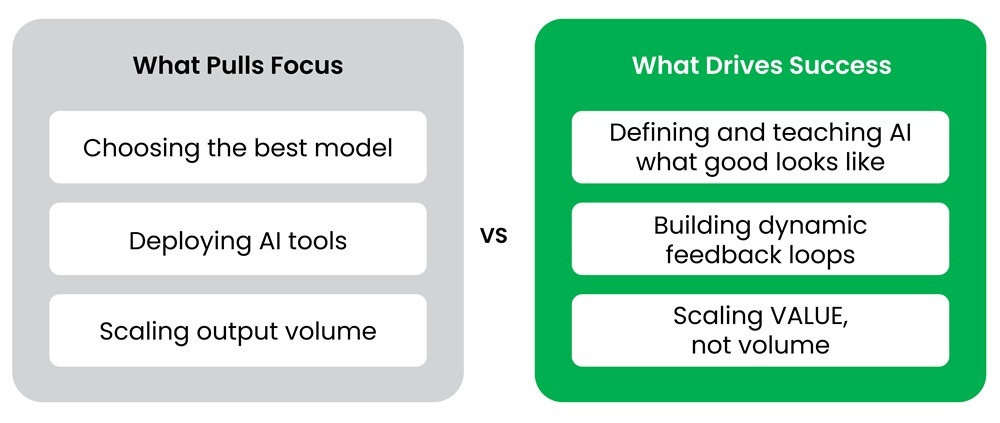
Figure 2: The AI Prioritization Gap in Pharma
Seeing technology in action is rewarding, but if we focus too much on the technology side, we risk getting ahead of ourselves by scaling output before we've built the systems that make it count. As we look ahead, the real question is whether we're building a disciplined, continuous learning system or simply moving faster.
I'm optimistic because the answer is within our control. The organizations that get this right won't be the ones with the best models. They'll be the ones that did the quieter work first: setting a clear standard for quality, building the loops that let the system learn, and staying honest about where AI helps and where it doesn't. That's what turns output into value.
Acknowledgements
This article was developed with the contributions and support of Frank M. Chen, Marketing Hub Lead, and Mehul Shah, Executive Director, Insights and Analytics, both at Bausch + Lomb; along with the following team members at Axtria: Disha Gupta, Senior Director, AI and Data (Commercial Agentic Omnichannel COE); Anmol Bhardwaj, Senior Manager, AI and Data (Commercial Agentic Omnichannel COE); Nidhi Jolly, Senior Manager, Marketing; and Vijay Anusha Chandrabhatla, Project Lead, Decision Intelligence.